

Company cars: how to avoid conflicts related to company vehicles
In many SMEs, company car and vehicle fleet management quickly becomes a source of tension among employees, managers, HR departments, and management.
Good news: it is entirely possible to prevent these conflicts by structuring a real vehicle use policy, adapted to an SME with 20 to 100 employees. This article offers a concrete, results-oriented approach to secure your vehicle fleet, clarify the rules of the game, and ease internal relations.
👉 Objective for your SME:
fewer conflicts, fewer hidden costs, more transparency in company vehicle use. Discover simple tracking solutions for SME fleets

1. The Most Common Conflicts Related to Vehicles in SMEs
To implement an effective company vehicle policy, it is useful to identify the most frequent sources of conflict. These occur in the majority of SMEs, regardless of the sector.
1.1. Unauthorized Personal Use of Vehicles
This is the number one issue. An employee occasionally uses a company service vehicle to go home, run errands, or go away for the weekend, even though this has never been clearly authorized. From the employer's perspective, the vehicle should only be used for professional travel.
Without written rules, everyone has their own interpretation. The result: feelings of injustice, rumors, accusations of "privileges" or favoritism, direct tensions between colleagues and managers.
1.2. Accidents, Fines, and Liabilities
Another source of conflict: who pays what in the event of an accident, damage, or fine? When the company car or service vehicle is flashed for speeding, what should be done? Does the company pay the fine? Is the employee penalized? Is it different if the use was private or professional?
Without a clear framework, these situations are handled on a case-by-case basis, fostering a sense of arbitrariness and undermining trust.
1.3. Neglected Maintenance and "Old-fashioned" Fleet Management
In many SMEs, there is no structured fleet management: the monitoring of revisions, technical inspections, and vehicle condition relies on the goodwill of users. Responsibility is shirked: "I thought the previous colleague had done the oil change," "I didn't know I had to check the tires."
The consequences: avoidable breakdowns, additional maintenance costs, vehicle downtime... and mutual reproaches among employees, fleet manager, and management.
1.4. Booking, Availability, and Feelings of Inequity
When multiple teams share the same service vehicles, bookings can become a headache. Some people "book" simply by email, others by phone or verbally. Latecomers get nothing, while early birds keep the vehicle longer than expected.
Conflicts then arise over priority issues: who needs the vehicle most? Salespeople? Technicians? Executives? Without a transparent booking system, frustration quickly mounts.
Key takeaway: The majority of fleet conflicts stem from grey areas, not ill will. Your role is to reduce these grey areas with clear rules and simple tools.
2. Establishing a Framework: Company Vehicle Policy and Usage Policy
The first step to avoid conflicts is to formalize a clear, well-known, and shared vehicle use policy. The goal is not to complicate teams' lives, but rather to provide security for everyone.
2.1. Distinguishing Company Cars from Service Vehicles
Many tensions arise from the confusion between these two concepts:
- Company car: The employee can generally use it for both professional and personal travel. The rules for private use (weekends, holidays, family) must be specified in writing.
- Service vehicle: Intended solely for professional use, except for written exceptions (late return, on-call duty, etc.).
Clearly indicate, in the internal vehicle regulations or a dedicated charter, which vehicles fall into which category.
2.2. Building a Simple and Readable User Charter
Your company vehicle policy must answer the following questions in writing:
- Which categories of employees can have a vehicle?
- Is private use allowed? If so, within what limits?
- Who pays for fuel in case of private use?
- Who is responsible for fines, tolls, and parking?
- What are the basic maintenance and inspection rules?
- What are the penalties for repeated non-compliance with the rules?
The document can be appended to the employment contract or internal regulations, and signed by the employee upon vehicle handover. The important thing is that it is short, clear, and operational.
👉 Save time:
create a customizable charter template by site or vehicle category. Download an example usage charter
2.3. Clarifying the Handling of Accidents and Fines
To avoid endless discussions, plan ahead for the management of sensitive events:
- Systematic declaration of accidents (even minor ones) according to a simple procedure.
- Principle for fines: the identified driver is responsible, except in special cases (theft, impersonation).
- Informing employees of the employer's legal obligation to designate the driver in certain cases.
By linking this section to the Highway Code and the Labor Code, you strengthen the legitimacy of your vehicle use policy.
3. Tools and Technologies for Peaceful Company Vehicle Management
A good written framework is not enough. To streamline daily operations, it is useful to equip your SME with simple fleet management tools. The goal is not to install an overly complex system, but to replace scattered Excel files and emails.
3.1. A Clear and Centralized Booking System
For shared service vehicles, implement a single booking system:
- a shared calendar (Outlook, Google Calendar) per vehicle;
- or even better, a small online booking tool or a feature integrated into fleet software.
Each reservation specifies: the employee's name, the mission, the times, the location. Everyone sees real-time availability, which significantly reduces conflicts.
3.2. Simple Maintenance and Mileage Tracking
Even a basic dashboard allows you to track:
- revision and technical inspection dates;
- each vehicle's mileage;
- reported incidents or breakdowns.
You can use a shared file, but a small fleet management software or a tracking solution with automatic mileage reporting will greatly simplify the task.
👉 Automate without complicating:
a GPS tracking solution can automatically report mileage, journeys, and help plan maintenance. Discover Easy Finder 4G for company vehicles
3.3. Geolocation and Prevention of Fleet Conflicts
Vehicle geolocation is a sensitive topic, but when properly framed, it can reduce tensions rather than create them. The benefits for the SME:
- knowing where vehicles are in case of emergency or theft;
- verifying journeys in case of a customer dispute, without questioning the employee's good faith;
- objectifying travel times and distances covered.
It is essential, however, to respect the legislation (employee information, respect for privacy, clearly defined purposes) and not to turn the tool into a generalized surveillance system.
4. Legal Aspects: What HR and Fleet Managers Need to Know
To avoid conflicts, HR managers and fleet managers must master a few key points of the French legal framework.
4.1. Company Car and Employment Contract
The company car is often considered a benefit in kind. It must therefore be stipulated in the employment contract or an addendum. The document specifies:
- authorized use (professional and/or personal);
- conditions for withdrawing this benefit (change of position, serious misconduct, etc.);
- eventual treatment of the vehicle in case of contract suspension (long-term sick leave, parental leave).
Unilaterally withdrawing a company car without a legal framework can generate a serious conflict, or even an industrial tribunal dispute.
4.2. Service Vehicles, Internal Regulations and Disciplinary Power
Service vehicles can be governed by internal regulations or a service note applicable to all. Non-compliance with the rules (unauthorized private use, refusal to report an accident, etc.) can, in some cases, lead to disciplinary action.
However, it is essential that the rules are:
- written and brought to the attention of employees;
- proportionate to the stakes;
- applied consistently and non-discriminatorily.
4.3. Geolocation, Personal Data, and Transparency
Geolocation is governed by the GDPR and the recommendations of data protection authorities. To avoid conflicts, you must:
- clearly inform employees about the existence of the device and its purposes;
- limit tracking to working hours, except in special cases (on-call duty, specific security);
- define a reasonable data retention period.
Good practice: Involve your CSE (if it exists) and/or employee representatives when implementing a geolocation system or new vehicle regulations.
👉 To go further:
refer to the practical guides of your Ministry of Labor and the recommendations of data protection authorities. Consult official resources
5. Internal Communication: A Major Lever for Conflict Prevention
Even the best company vehicle policy will only be useful if it is understood, accepted, and applied. How you communicate your rules and tools is therefore crucial.
5.1. Presenting the Vehicle Policy as Support, Not a Constraint
When deploying a new vehicle use policy or management tool, emphasize the benefits for everyone:
- fewer disputes over bookings and priorities;
- fewer legal risks for employees and the company;
- improved vehicle and driver safety.
Position the system as a means to avoid injustices, not as an additional control tool.
5.2. Training Local Managers
Team leaders play a key role in applying the internal vehicle regulations. They must:
- know the rules and explain them simply to their teams;
- manage exceptions (late mission, emergency) without weakening the general framework;
- report recurring problems to HR and the fleet manager.
A short internal training session or a practical guide for managers is often enough to avoid divergent interpretations.
5.3. Setting Up a Problem Reporting Channel
To prevent tensions, provide a simple channel (dedicated email address, internal form, fleet contact person) allowing employees to:
- report a system malfunction in the booking system;
- report a vehicle problem (unusual noise, worn tires);
- ask questions about the rules (private use, fines, etc.).
The sooner problems are addressed, the less likely they are to escalate into open conflict.
6. Example of a Progressive Approach in an SME with 50 Employees
Here's a concrete scenario for an SME of 50 people with 8 vehicles: 3 company cars for sales representatives and 5 service vehicles for technicians.
Step 1: Management and HR list recurring problems from the past 12 months (delays in revisions, booking disputes, unpaid fines, etc.). Step 2: Drafting of a vehicle use charter, validated by management and shared with employee representatives.
Step 3: Implementation of a shared calendar for service vehicles, tested for one month, then adjusted. Step 4: Installation of a simple tracking system to know the mileage and location of vehicles, with transparent communication on objectives.
Step 5: Feedback in a team meeting: initial results, reduction in incidents, fewer tensions over priorities. In a few months, the SME has a truly structured company vehicle management, without excessive administrative burden.
👉 Do you want to structure your vehicle management without a complete overhaul?
Start with a simple charter and a light tracking tool, then evolve your system based on field feedback. See solutions adapted to SME fleets
Conclusion: Preventing Fleet Conflicts Through a Suitable Framework and Tools
Fleet conflicts are not inevitable. They primarily arise when rules of use are not explicit, responsibilities are unclear, and vehicle management relies on informal habits.
By implementing a clear company vehicle policy, clearly distinguishing between a company car and a service vehicle, adopting simple booking and tracking tools, and paying attention to your internal communication, you can drastically reduce tensions surrounding your company vehicles.
👉 Next step for your SME:
1. List your main points of friction (personal use, bookings, maintenance).
2. Draft or update your vehicle use policy.
3. Test a tracking and booking tool on a small scope. Discover how Trackr4all can help you secure and pacify your fleet
Articles similaires
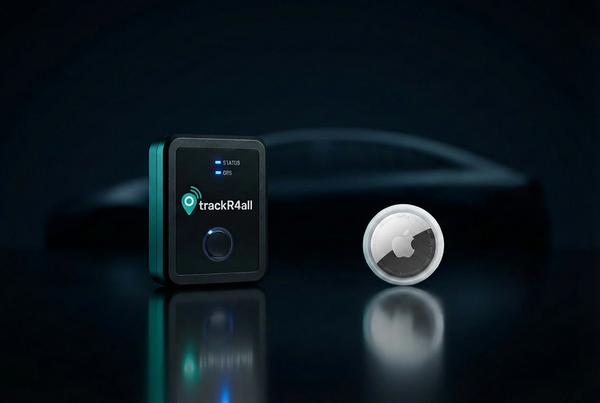
4G Tracker vs. Bluetooth Tracker: Which Tracking System Should You Choose
Between a 4G tracker and a Bluetooth tracker, the choice is not always obvious. Both promise to help you f...
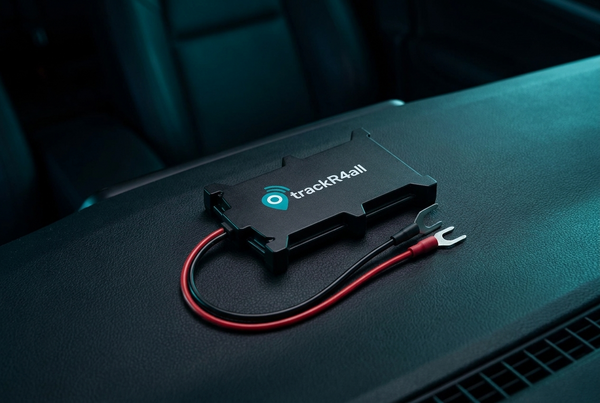
Easy Finder 4G installation: complete installation guide
This 4G GPS tracker has been designed to remain simple to use, while offering highly reliable real-time geo...

Driver behavior detection: how to spot abnormal driving behavior
Driver monitoring is no longer just for experts: it now concerns both road safety and risk management for ...