

Why do drivers often forget where they parked their car?
Who hasn't wandered through a parking lot frantically clicking their remote to make their car flash its lights? Between the crowds, the similar-looking floors, and daily stress, it's very easy to forget where you've parked. This phenomenon affects everyone: hurried individuals, overwhelmed parents, and even employees using a company car in a large business.
Understanding why we so often lose track of our vehicle allows for better organization. We will explore how spatial memory and attention work, which situations contribute to forgetting, and then what simple solutions can be implemented, whether you drive your own car, a loaned vehicle, or a full fleet.
👉 Want to stop searching for your car for hours?
A GPS tracker allows you to locate it instantly on your smartphone. Discover Easy Finder 4G for cars and commercial vehicles

1. Spatial Memory and Attention: What Your Brain Really Does
Forgetting where you parked your car is not a sign of foolishness. It's the normal result of how our brain processes information. It prioritizes what seems important at the moment and puts the rest in "automatic mode." Parking is often one of those routine actions to which we no longer pay attention.
1.1. Spatial Memory in Simple Terms
Spatial memory helps us navigate space: finding the exit of a building, remembering the way to school, or the location of an object. To function well, it needs clear visual cues and a minimum of attention when we first encounter a place. Without this, the information remains vague and quickly fades.
In a parking lot, if you get out of the car already thinking about your meeting, your errands, or an urgent call, your brain doesn't really register the landmarks around you. Later, the aisles look similar, and you feel like the car has "disappeared."
1.2. The Key Role of Attention and Mental Load
When our attention is saturated by stress, fatigue, or a heavy mental load, we retain small details less effectively. The parking spot becomes background information. This is why we are more likely to forget where we parked the car on days when everything happens too quickly or after a long day at work.
👉 Useful tip:
The moment you turn off the engine, take three seconds to look around you, spot a sign or a zone color. This micro-pause is enough to strengthen spatial memory.
2. Situations That Cause You to Forget Your Car's Location
Certain contexts make forgetting very likely, especially when they accumulate. They concern both individuals and companies managing multiple vehicles.
2.1. Huge Parking Lots and Repetitive Environments
In parking lots of shopping centers, stadiums, airports, or large corporate sites, the floors and rows all look alike. Same paint, same pillars, same lighting: for spatial memory, it's a real headache. Without distinctive landmarks, the brain mixes up the zones, and you can easily search on the wrong level.
2.2. Stress, Fatigue, and Haste
On days when you're running late or exhausted, your main thoughts are getting there on time, not forgetting your files, or managing the kids. The act of parking becomes automatic, and the brain doesn't register the level, row, or zone. This is often what happens before important meetings, holiday departures, or weekend errands.
2.3. Vehicle or Driver Change
The risk of forgetting increases when you're not driving your usual car: a rental vehicle, a car borrowed from a friend, or a company car. You have fewer personal reference points, and you sometimes remember the parking lot incorrectly. In a company, the same vehicle might be moved by several employees during the week: the next day, no one knows exactly where it's parked.
👉 For vehicle fleets:
A geolocation system avoids calls, emails, and wasted time in finding a service vehicle. See Trackr4all solutions for businesses
3. Concrete Examples: Individuals and Professionals
Let's look at two typical situations: that of an individual and that of a fleet manager. In both cases, forgetting the car's location comes at a cost in time, stress, and organization.
3.1. The Individual in a Shopping Center Parking Lot
You arrive at the mall on a Saturday afternoon, the parking lot is almost full, the kids are restless in the back. You find a spot, get out quickly, thinking about your shopping list and the crowds in the aisles. An hour later, you exit through a different door and, naturally, nothing seems familiar. You circle around, go up a floor, go back down: it's a classic scene.
In this case, a simple photo of the sign, a quick note on your phone, or a verbal cue like "P2, green zone, row D" is enough to prevent you from losing your vehicle again. You delegate part of your memory to your tools and reduce stress when it's time to leave.
3.2. The Company Car That No One Can Find
On the business side, imagine a company car used by three sales representatives in the same week. Each parks wherever they find a spot: visitor parking, an adjacent street, the underground parking of the neighboring building. On Friday morning, a colleague running late for a client appointment can't find the car and has to call several people to find out who used it last. Result: a postponed appointment and a less professional image.
👉 Save time in the field:
By equipping each company vehicle with a GPS tracker, your teams can locate it in seconds via the app, without unnecessary phone calls. Easy Finder 4G – ideal for company cars and commercial vehicles
4. How to Stop Forgetting Where You Parked Your Car?
Good news: there are many solutions, both behavioral and technological, to stop losing your vehicle in parking lots. The goal is not to have perfect memory, but to set up a simple system that works even on days when you're tired.
4.1. Individual Tips for Drivers
- Take a photo: photograph the zone sign or parking spot number as soon as you get out of the vehicle.
- Note the location: write "Level -2, row C, near the elevator" in a note or SMS sent to yourself.
- Verbalize: saying out loud where you parked helps your brain encode the information.
- Create a routine: always repeat the same ritual when parking.
4.2. Apps and GPS Trackers
Some navigation apps automatically record your parking position. They are convenient for occasional drivers. For more regular use, especially if you sometimes lend your car or if several people use it, a GPS tracker offers more security and flexibility.
Installed in the vehicle, it transmits its position in real-time to an application. This way, you can check where the car is, even if someone moved it during the day, and be guided to its exact location on the street or in a large parking lot.
👉 Easy-to-install solution:
Trackr4all offers 4G trackers designed for daily vehicle tracking, with a clear application for individuals and professionals. Discover Easy Finder 4G
4.3. Organization for Businesses and Fleet Managers
Businesses can go further by combining internal organization with fleet management tools. Some best practices:
- define dedicated parking zones by team or vehicle type;
- systematically note the parking location in a shared calendar or fleet software;
- equip vehicles with a reliable geolocation system;
- plan a clear procedure in case of an untraceable vehicle.
👉 Track equipment and trailers too:
A standalone tracker is particularly useful for vehicles that often change sites. Asset Finder 4G Rechargeable – for trailers, machinery, and equipment
5. Frequently Asked Questions About Forgetting Where You Parked Your Car
Why do I forget where I parked my car?
Because your attention was focused on something else at the time of parking. Without precise landmarks recorded by spatial memory, your brain no longer knows what zone you were in.
Is it serious to often forget your parking spot?
In isolation, this phenomenon is common and generally benign. It becomes concerning if you notice other significant memory difficulties in your daily life.
How to stop circling in parking lots?
Adopt a small parking ritual: photo, note, verbal cue, or even use an app or GPS tracker. These tools relieve your memory and save you time.
Why is it worse with a company car or rental car?
Because you change parking lots more often and you don't have the same reference points as with your personal car. In a company, several people might also move the vehicle without warning.
What tools for car fleets?
Fleet management solutions based on geolocation allow you to locate each vehicle, know who is using it and where it is parked, which greatly limits wasted time and misunderstandings.
Conclusion: A Few Seconds of Attention, a Lot of Time Saved
If you regularly forget where you parked your car, don't feel guilty: it happens to a lot of drivers. The combination of rushed spatial memory, confusing parking lots, and a busy lifestyle explains most of the problem.
However, you can take action: by taking a few seconds to memorize landmarks, by establishing a small parking ritual, and, if necessary, by relying on digital tools or a GPS tracker, you can transform a source of stress into a simple formality, whether you manage a single vehicle or an entire fleet.
👉 Your turn:
Choose a tip or tool to try out on your next parking trip, and see the difference. I want to easily locate my car
I want to track my professional vehicles and equipment
I discover all Trackr4all solutions
Articles similaires
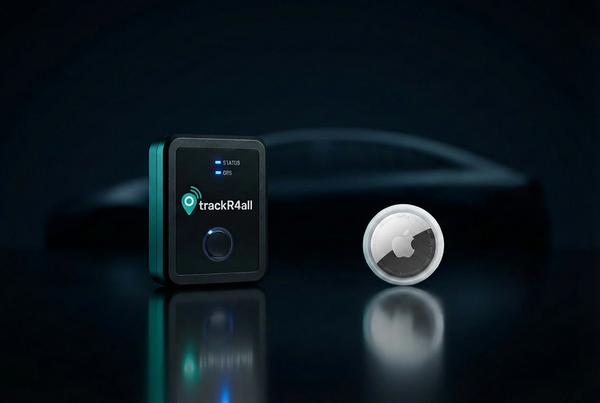
4G Tracker vs. Bluetooth Tracker: Which Tracking System Should You Choose
Between a 4G tracker and a Bluetooth tracker, the choice is not always obvious. Both promise to help you f...
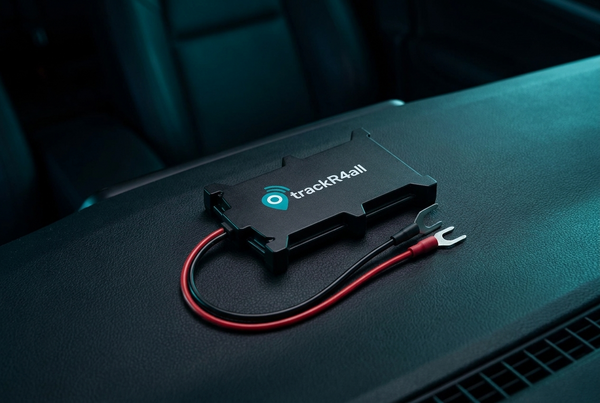
Easy Finder 4G installation: complete installation guide
This 4G GPS tracker has been designed to remain simple to use, while offering highly reliable real-time geo...
Driver behavior detection: how to spot abnormal driving behavior
Driver monitoring is no longer just for experts: it now concerns both road safety and risk management for ...