

How to reduce anxiety related to vehicle tracking
Vehicle location anxiety has become very common. On one hand, owners want to protect their car from theft. On the other, they worry about tracking privacy, the use of their data, or "monitoring" a loved one. Fleet managers also experience specific stress: being responsible for GPS tracking while respecting employee privacy.
Good news: it's possible to enjoy the benefits of vehicle geolocation (security, optimization, peace of mind) while significantly reducing stress. In this article, we will explore the origins of this anxiety, how technology can reassure rather than worry, and what best practices to adopt according to your profile: business, individual, or parent.
👉 Objective: transform a stressful car GPS into a tool that truly simplifies your life. Discover vehicle tracking solutions designed for peace of mind

1. Why is vehicle location anxiety so common?
Before discussing solutions, it's helpful to understand why vehicle geolocation can generate stress. It's not just a matter of technology, but also of psychology.
1.1. Fear of theft and need for control
Vehicle theft figures remain a concern in many countries, leading more and more motorists and businesses to install a car GPS tracker. Numerous studies show that vehicles equipped with a tracking system are much more often recovered in case of theft and sometimes less targeted by thieves.:contentReference[oaicite:0]{index=0}
This need to protect one's investment (or the company fleet) is legitimate. But it can also fuel a form of hypervigilance: some drivers compulsively check the application, fear system failure, or imagine the worst at the slightest unusual signal.
1.2. Concerns about tracking privacy
Another source of anxiety: the confidentiality of geolocation data. Where does the data go? Who can see the routes? How long is it stored? Individuals and employees rightly fear a form of permanent surveillance.
Data protection authorities such as the CNIL in France or their equivalents in Belgium regularly remind us that geolocation must comply with GDPR, collect only necessary data, and clearly inform the individuals concerned.:contentReference[oaicite:1]{index=1}
1.3. Parental stress and safety of loved ones
For parents, vehicle location anxiety is often linked to the safety of young drivers: night driving, unknown roads, difficult weather. Real-time tracking is reassuring... but can also become a source of stress if every trip is constantly monitored or if a prolonged stop is misinterpreted.
👉 Only one vehicle to track?
Easy Finder 4G – ideal for cars and company vehicles
2. Understanding the psychological dimension of car GPS stress
Reducing car GPS stress also means understanding how our brain reacts to tracking.
2.1. The need for control... and its pitfalls
Cognitive psychology shows that we feel less anxious when we feel we are in control of the situation. A real-time vehicle tracking system meets this need: it provides immediate access to information. But the effect can be reversed if the application is constantly checked or if every small variation is perceived as a danger.
The goal is not to increase surveillance, but to define what is truly useful: being alerted in case of theft, checking that a risky trip went well, tracking a car fleet to optimize routes. Usage must remain proportionate.
2.2. Reducing geolocation stress through clear rules
Anxiety decreases when rules are clear and shared. For an employee, knowing exactly when geolocation is used (security, optimization, proof of service) and when it is not (break, private life) changes everything. For a teenager, knowing that not every trip is monitored, but only certain ones, is reassuring and avoids conflict.
👉 Simple psychological tip:
define in advance when you will consult the vehicle's position, and stick to these rules. This limits compulsive checks and associated stress.
3. Technological solutions to reduce vehicle location anxiety
Well-chosen and well-configured, technology becomes a stress reliever rather than a source of anxiety.
3.1. Car GPS tracker and vehicle geolocation
A modern car GPS tracker generally allows:
- real-time vehicle tracking on a map;
- smart alerts (unauthorized movement, zone exit, excessive speed);
- a history of trips for fleets or to analyze habits;
- precise location in case of theft or vehicle disappearance.
Fleet managers can thus optimize routes, reduce costs, and react quickly in case of problems. Individuals and parents have a safety net without needing to constantly monitor.
👉 Only one vehicle to track?
Easy Finder 4G – ideal for cars and company vehicles
👉 Several vehicles, trailers or equipment?
Asset Finder 4G Rechargeable – for fleets, trailers and equipment
3.2. Mobile applications and fleet dashboard
For businesses, a fleet management platform centralizes all information: vehicle position, status, important alerts, reports. The manager no longer spends their days tracking points on a map: they focus on exceptions (delays, anomalies, security) thanks to targeted notifications.
For parents, a clear application allows quick visualization that everything is fine (vehicle arrived at destination, no dangerous behavior), then closing the application without remaining focused on it.
4. Data security and tracking privacy: how to be reassured?
A large part of vehicle location anxiety comes from the fear of data misuse. Fortunately, the legal framework and certain certifications offer concrete benchmarks.
4.1. GDPR and vehicle geolocation
In Europe, vehicle geolocation data is personal data when it allows identification of a driver or employee. Its processing must comply with GDPR: clear purposes, data minimization, limited retention period, adapted security, and information of concerned individuals.:contentReference[oaicite:2]{index=2}
Authorities like the CNIL or Belgian authorities regularly remind us that geolocation cannot be used to continuously monitor working hours, nor to track employees outside professional hours. Respecting these limits is a key point to reduce stress for both employers and employees.
4.2. Certifications and security standards to check
To reduce anxiety, it is useful to choose a tracking provider that applies recognized standards. The ISO/IEC 27001 standard, for example, governs information security management systems and helps companies protect sensitive data in a structured way.:contentReference[oaicite:3]{index=3}
Concretely, this means that the provider has implemented processes to secure servers, control access, manage incidents, and continuously improve information protection. For a fleet manager or an individual, this is a reassuring signal: data is not managed "lightly."
👉 Before choosing a geolocation system:
check GDPR mentions, privacy policy, security commitments, and, if possible, certifications.
Learn more about choosing a compliant geolocation system
5. Practical advice by profile: business, individual, parent
Now let's move on to concrete recommendations to reduce anxiety, adapted to each audience.
5.1. Fleet managers: reducing car GPS stress at work
In a company, the challenge is twofold: securing vehicles and reassuring teams. Some good practices:
- Clearly document the purposes of tracking: security, route optimization, proof of delivery...
- Inform employees (memo, contract addendum) about how the system works and their rights.
- Limit vehicle geolocation to working hours and deactivate tracking outside working hours, when possible.
- Centralize tracking within a restricted team (fleet manager, management, security) to avoid abuses.
Transparent communication reduces mistrust: employees understand that the tool is for security and organization, not for spying on them.
👉 For businesses:
combine a reliable tracking system with a clear usage policy. Discover solutions adapted to professional fleets
5.2. Individuals: balancing security and privacy
If you are an individual, your stress often comes from a mix of fear of theft and fear of being "tracked." To regain peace of mind:
- Choose a provider that clearly explains where data is hosted and how long it is stored.
- Set up alerts to receive only essential information (theft, abnormal movement), not every little movement.
- Decide who has access to the application and use strong passwords.
- Remember that the tool is there for you, not the other way around: you set the level of use.
A good tracking system should give you peace of mind, not trap you in permanent surveillance.
5.3. Parents: securing without over-monitoring
For parents, the challenge is to balance security and trust. Some ideas:
- Explain to your teenager or young driver why you use geolocation: security, assistance, to reassure everyone.
- Set clear rules: for example, only check that the vehicle has arrived at its destination for certain trips.
- Use "arrival in a zone" alerts rather than following the trip live.
- Discuss sensitive trips together (evenings, long journeys) and how location can help in case of problems.
👉 For families:
a simple system, with well-chosen alerts, can reassure everyone without creating tension. See a solution suitable for family vehicles
6. Concrete benefits of a well-designed real-time vehicle tracking
When well-configured and well-explained, a real-time vehicle tracking system brings real benefits, which largely outweigh initial anxiety.
- Peace of mind: knowing that you can locate a vehicle in case of problems, without constantly monitoring it.
- Increased security: better responsiveness in case of theft or accident, assistance to emergency services and authorities.:contentReference[oaicite:4]{index=4}
- Route optimization: for fleets, reduction of unnecessary kilometers and fuel costs.
- Proof in case of dispute: passing times, route taken, useful for some professionals.
In summary, the tool is not the enemy. It is its configuration, its legal framework, and the way it is used that make the difference between a stress-generating GPS and a truly reassuring solution.
FAQ – Quick answers to questions about vehicle location anxiety
Is vehicle geolocation compatible with respect for privacy?
Yes, if it complies with GDPR: limited purposes, information of individuals, reasonable retention period, and data security. The problem is not the tool, but how it is implemented.
Does a car GPS increase stress?
It can, if the application is constantly checked. Used with clear rules and targeted alerts, it instead reduces stress, as it provides quick answers in case of doubt.
How can I reassure my employees about company vehicle tracking?
Explain the objectives, limit tracking to working hours, provide clear instructions, and strictly comply with data protection authority recommendations.
How can I protect my geolocation data?
Choose a transparent provider, verify GDPR compliance and security certifications (like ISO 27001), use strong passwords, and control access to the application.
Can geolocation be used for family vehicles without breaking trust?
Yes, provided shared rules are established and the tool is presented as an aid in case of problems, rather than a means to monitor every move.
Conclusion: transforming tracking into a stress-reducing ally
Vehicle location anxiety is linked to very human issues: fear of theft, concern for loved ones, fear of being monitored. Geolocation is not there to exacerbate these fears, but to address them in a structured way, provided reliable, compliant, and well-explained tools are chosen.
Whether you are a fleet manager, individual, or parent, you can take back control: clarify your needs, define usage rules, verify confidentiality guarantees, set up smart alerts... and then let technology work for you, rather than against you.
👉 Next step:
Identify what currently stresses you the most (theft, trip tracking, data). Then choose a concrete action to address it: Track a personal or company vehicle
Track multiple vehicles, trailers, or equipment
Discover all Trackr4all solutions
Articles similaires
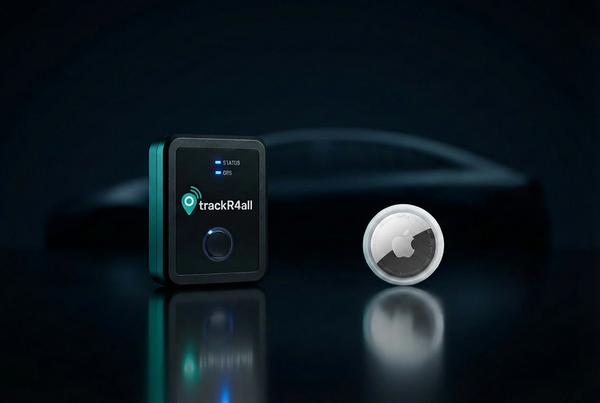
4G Tracker vs. Bluetooth Tracker: Which Tracking System Should You Choose
Between a 4G tracker and a Bluetooth tracker, the choice is not always obvious. Both promise to help you f...
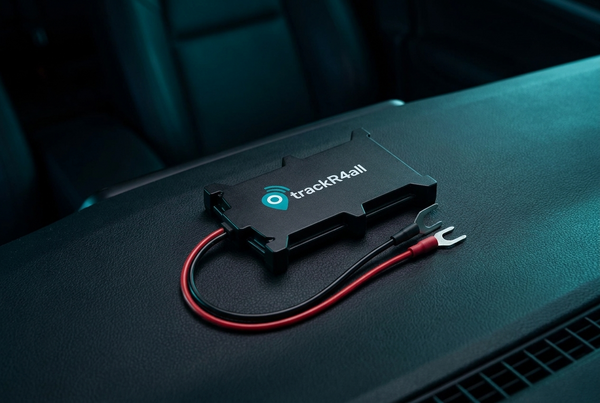
Easy Finder 4G installation: complete installation guide
This 4G GPS tracker has been designed to remain simple to use, while offering highly reliable real-time geo...

Driver behavior detection: how to spot abnormal driving behavior
Driver monitoring is no longer just for experts: it now concerns both road safety and risk management for ...